Causes of low vision
Eye diseases are a common cause of low vision. For example:
- Hazy, blurry vision can result from cataracts.
- Blurred or partially obscured central vision is typical of macular degeneration.
- Diabetic Retinopathy causes blind spots, blurriness and visual distortions.
- Poor peripheral vision is a hallmark of Glaucoma.
- Retinitis pigmentosa reduces peripheral vision and the ability to see in the dark.
- Light sensitivity and loss of contrast are other symptoms of these and other diseases.
- Heredity and eye injuries can result in low vision.
The impact of low vision
Children can have low vision due to a birth defect or injury. Visually impaired children may have learning problems that require special instruction and they may need help developing socialization skills.
Vision loss in adults and seniors can be particularly traumatic, leading to frustration and depression. Losing the ability to drive safely, read quickly, watch television or view a computer screen can cause people with low vision to feel shut off from the world.
What to do about low vision
Poor vision that cannot be corrected with eyeglasses or contact lenses could be the first sign of serious eye diseases such as age-related macular degeneration, glaucoma or retinitis pigmentosa. Or it could mean you are developing a cataract that needs removal. Whatever the case, it’s wise to take action before further vision loss occurs.
An eye specialist can evaluate the degree and type of vision loss you have, prescribe appropriate low vision aids such as lighted handheld magnifiers, digital desktop magnifiers, and bi-optic telescopes, and help you learn how to use them. Special eyewear with tinted UV filters can help with light sensitivity and heighten contrast.
Contact Lens and Low Vision Aids
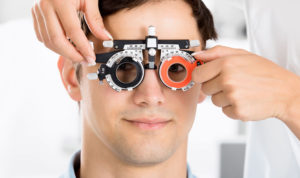
Low vision evaluation is a process that helps to assess the visual needs of a person with low vision. An ophthalmologist who specializes in low vision performs a comprehensive visual function evaluation using special charts. After a thorough examination, the ophthalmologist gives advice on the following:
- Optimum use of vision
- The low vision aids or devices required and their usage.
- The best adaptation to home, school, the workplace, and nearby surroundings.
Eye Checkup & General Ophthalmology
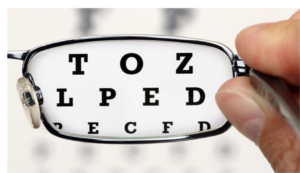
Common Vision Problems:
Near sightedness – Also known as myopia, nearsightedness is the most common vision problem in ophthalmology. Images focus in front of the retina, instead of directly on the retina’s surface, because the eye is too long or the cornea is too curved. One or a combination of these abnormalities can cause objects that are far away to appear blurry. You can correct this problem by wearing glasses, contacts, or by undergoing refractive surgery, such as LASIK.
Far sightedness – Hyperopia, or farsightedness, affects around a quarter of the population. This ophthalmological issue occurs when light enters the eye behind the retina because the eye is too short or the cornea is too flat. This will make objects that are close to you appear blurry. It is common for children to be born farsighted, but the problem fixes itself naturally because the eyeball lengthens with development. Like near-sightedness, far-sightedness can be fixed with corrective lenses, contacts, or, in some cases, LASIK surgery.
Astigmatism – Images are distorted and not uniform in all directions, so objects both near and far appear blurry. This occurs when the cornea is shaped irregularly. Astigmatism often occurs in conjunction with myopia or hyperopia. Ophthalmologist are unsure of the specific cause of astigmatism, but it’s easily treated with the use of glasses, contacts, and, in some cases, LASIK surgery can help with certain types of astigmatism.
Presbyopia – Disorder caused by the normal aging process that typically affects reading vision. Doctors can also measure the severity of these vision problems by evaluating the shape of your eye and its cornea. The results determine your prescription. These problems are usually corrected with eyeglasses, contact lenses, or by laser vision correction procedures – AST, CK and LASIK .